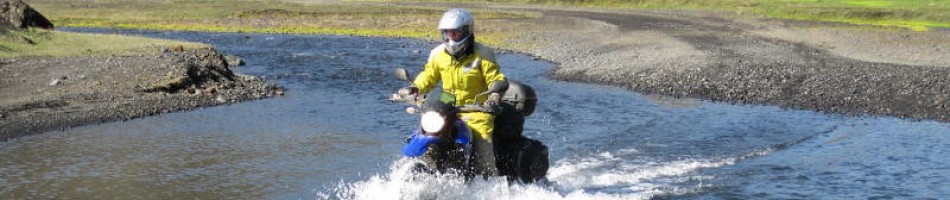
Ride To The End Of The World – Fin del Mundo (Part 1)
New Hampshire’s winter snows make for fine skiing, snowboarding and snowmobiling, but not exceptionally good motorcycling. With autumn over and the real winter rapidly settling in, our motorcycling would be relegated to our anxious dreams awaiting the spring. It is always a funny feeling knowing that our thoughts would be similar in nature to those of the hibernating wild animals tucked away in their dens awaiting the new growth fresh berries with the coming thaw of spring. Each year, to both of us spring couldn’t come too soon.
But this year would be different. We were traveling to a place where at this time of year it would be warm and there would be no snow except very high in the mountains. It was time for me to bone up on my Spanish because this winter we were going to ride to the Fin del Mundo, or translated into English, to the “end of the earth”.




We were flying from Boston, Massachusetts into Santiago, Chile where the following day we’d hop a short flight to Pucon, Chile to start our riding adventure. Our route would ultimately take us from Pucon, Chile a ski resort with its own volcano to Ushuaia, Argentina at the very tip of South America. In fact, it’s the furthest south you can get on any land mass on the planet. Antarctica is composed entirely of ice, so it does not count.
So as the days of November increased, instead of padding around in small circles worrying that the NH snow would soon blanket the roads and trails ending riding for another season, we were actually quite spry, gathering all our riding gear and stashing it in our luggage for the flight to Chile. No sitting about for us this year, we were ready to ride!
So when the appointed day came in mid November, we boarded our flight in Boston and after a quick stop in Dallas for a bowl of some rather spicy chile and nachos, we once again boarded another plane, our destination once again Chile, this time the country, not the kind you eat. The flight was crowded, loud and the lavatory on the aircraft overflowed, but other than that, the flight was uneventful. Upon landing, we cleared customs and grabbed a cab to our hotel which was quite nice.
It was warm and sunny outside so we decided that since we only had an overnight in Santiago, we’d better make the best of it and we went for a walk to take in the sights and grab a quick lunch. It immediately became clear that Santiago was an alive and bustling city. Traffic moved chaotically, people walked on the sidewalks and went about their business, while others sat at the sidewalk cafe’s enjoying lunch, espresso or just good conversation.
But as we walked around, we found that we weren’t apparently all that far from home. As we rounded a corner, we came to none other than a Dunkin’ Donuts shop. Complete with a sign in Spanish that read “Energiza tu vida!” or Energize your life! Jeez, I didn’t know that Dunkin’ Donuts did that. I wonder what different stuff they put in the donuts in South America? We continued walking around for a couple of hours, bought dinner and returned to our hotel to get ready for tomorrow’s flight to Pucon where our journey to the end of the earth would start in earnest.
When we awoke the following morning the weather was excellent and after breakfast we headed to the airport for our hour long flight to Pucon. That flight was indeed uneventful and we arrived rested and ready to go. We were picked up by a van for the brief ride from the airport to our hotel. Immediately we began to see signs for the ski resort there as well as Pucon’s own volcano. Ultimately, we were dropped at another hotel at the edge of town with an excellent view of Pucon’s own volcano, Villarica. It is indeed a majestic peak, with smoke slowly but consistently puffing from its crest. Villarica is in fact an active volcano and a fairly active one at that. With all that molten roiling fury below, you can just imagine the strength and power that an eruption would unleash. It would be a disaster as the town of Pucon sits almost directly below the towering dragon that is Pucon.
Wiped out would the quaint town in which we now ate gigantic steaks and drank local beverages like Pisco Sours. Gone would be the vendors that sold their hand made wares and the restaurants that serviced all the visitors. There’d only be empty streets to show for all that man had accomplished in that area for years to come. But for now, we were content to watch the sun go down on Villarica and enjoy the increasingly bright and magnificent glow that was now emanating from its face and sides. So as the sun went down, it was time for some Chilean beef. We ordered steak and a platter arrived which could feed an army. One thing that Chilean and Argentine people do not do is skimp on the beef and when our beef arrived for inspection prior to being cooked, it looked as though 3/4th of a cow had been brought to the table for early dinner. In any event, we ended up scarfing down a gigantic meal for dinner and we were ultimately chauffeured back to the hotel for a bright and early start of the journey on the following morning.
We’ll tell you about the beginning of the real journey in the next part.
Glen Heggstad
It seems almost fitting that we start off with a rider, world traveler, motivational speaker and one of the most amazingly strong hearted individuals I have ever met; Glen Heggstad. Glen has led a life of significant twists and turns that could have led him down a patch of destruction. However, Glen was able to convert all of this adversity into positive influences for himself and the people he met as he circumnavigated the world.
Two separate books, Two Wheels Through Terror (a title he dislikes but was demanded by his publisher) in which his motorcycle trip from California to the tip of South America was interrupted when he was kidnapped and held hostage, and his second book One More Day Everywhere, chronicle his motorcycle circumnavigation of the planet. Both books will hold you spellbound for different reasons.
Two Wheels Through Terror for Glen’s ability to deal with adversity and his will to continue and One More Day Everywhere for the excitement of navigating the entire planet on a motorcycle and visiting people and places that some would not dare. All in the quest to meet the people of the planet.
Glen has been so touched by the people and places he’s visited, he donates 100% of his book royalties to charitable organizations. You can puchase Glen’s books from the Ride2ADV Gear Store by clicking HERE or at his website directly.
From Glen’s website @ www.strikingviking.net:
For half a century, it’s been a rocky road of contrasting lifestyles for Glen Heggstad. Growing up in San Francisco and influenced by Jack Keroauc’s novel On The Road led to hitchhiking across the US at the age of sixteen. Toggling between living in the streets and foster homes, a rebellious Glen followed the sentiments of his high school teachers who warned of winding up behind bars—he did: handlebars. And then into life of an outlaw biker. By age twenty-seven he had retired from the Hells Angels motorcycle club.
In 1979, Heggstad committed to full time martial arts training, eventually earning Black Belt teaching credentials in: Chinese Kung Fu, Shotokan Karate, Japanese Judo and Brazilian Jiu-Jitsu. During thirty-three years of devoted practice, he’s earned numerous titles in International championships while training troubled youths to believe in themselves via similar paths in martial spiritual development. But because of his Norwegian heritage, a lust for travel runs deep in his Viking blood.
Looping the planet four times over the last three decades, Heggstad has sought unique adventures wandering through fifty-seven developing countries via chicken buses, riverboats, by foot and even by elephants. From twice trekking the Himalayas to the jungles of South America where he was taken prisoner in the Colombian civil war, Heggstad’s crowning achievement became a multi-year solo motorcycle odyssey around the earth as chronicled in his second book One More Day Everywhere. From the wilds of Siberia and the Mongolian Gobi Desert to zigzagging the Middle East through the West Bank, Israel, Pakistan and India, to the length of Africa, Heggstad rode into one challenging experience after another.
Glen has encountered generous hospitality on nearly every level imaginable from Gobi Desert Nomads, to the cannibals of Indonesia and Middle Eastern Bedouin tribes, to later surviving for weeks on cows blood mixed with honey on the Ethiopian savannah. Being equally at home with city folk, simple villagers and primitive tribesmen, enhanced his empathy for those still struggling. This compelled him to donate 100% of his book royalties to international aid organizations committed to building schools in the developing world.
Now channeling energies into motivational speaking about achievement and goal orientation, he uses lessons gleaned from the martial arts competition arena and adventure travel to encourage others to better their lives and enhance their careers.
Books
We’ve found that books nourish the mind and spirit. They can inspire you, give you courage, thrill and frighten you. Skillful writers can convey sights, sounds and experiences while transporting you to places that you might never have the opportunity to visit. While your physical being may not have arrived, your mind has and you are a more fulfilled person for it. In this section, we’ll offer a few words about books and authors whose writing skills and abilities will bring you to new places or teach you a thing or two about yourself or others.
Enjoy!
Stuff I’ve Learnt from Motorcycles
Just read an interesting little article about lessons learned from motorcycling. Take a look and see what you think. This is a pretty extensive list of learning, but I think you will be able to add to it.
Thanks to David at Observations of a Perpetual Motorcyclist
Enjoy!
Alaska – Gravel, Grandeur & Goofy Grins (Final Chapter)
Seward’s spectacular ocean beauty and sea life had left us slack jawed with amazement. It seemed that each time we went to a new location in Alaska, there was another gorgeous scene ready to unfold directly in front of us. But this day, there was another reason for our slack jaws and now droopy pouts. Today, we were to head back to Anchorage to end our Alaskan and Canadian Yukon adventure.
We had seen so much and met so many wonderful people, that we were indeed quite sad to be beginning the end of our journey. So with really heavy hearts and quite furrowed brows, we packed the bikes and headed northwest towards Anchorage. I can honestly say that the pace was purposely slow and the bike to bike communications between Kim and I were at an all time low; each of us lost in our thoughts and remembrances of the journey we had just experienced.
As we made our way to Anchorage, we took a meandering route to extend our time a bit more. The roads slowly and quietly hissed under our tires, interrupted only by the crunch of gravel and slight wobble of handlebars as we made our way over several sections of road under construction. Each time I was almost immediately returned to the hundreds of miles of gravel we had just covered. Soaring mountains capped with snow, glaciers creaking, groaning and calving new icebergs into a churning sea, wild animals roaming free and unafraid of man, soaring birds and amazing scenery could have conspired to effortlessly lift me from the bike and forever transform me from an itinerant observer to a permanent part of the landscape. I’d just become another part of what is the amazing natural life force that is Alaska. And if it had, I would have welcomed it.
But Alaska did not reach out and grab either Kim or me and we rolled into Anchorage late in the evening, very tired and each upset that our adventure was over. We’d get up leisurely in the morning, grab breakfast and ride over to the shipping agent. There we would unload our gear from the bikes and pack it in our suitcases for the plane ride home. We’d grab a cab back to the hotel and the following afternoon, catch a flight back to Boston and then drive home to NH. The agent would then crate the bikes up and send them home to NH.
-

- 2,430.1 miles covered on pavement and gravel
-

- 2,430.1 miles covered on pavement and gravel
-
- Our trusty steeds at the shipping agent. Dirty, but none the worse for wear.
-

- Unpacking the bikes at the shipping agent.
-

- L to R – MaryLee, Tracy, Kim and Mike overlooking Eagle River, AK
-

- Mantanuska Valley Horse Farm
-
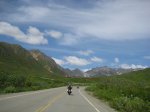
- On the road to Hatchers Pass
-

- Tracy (rider) and Mike (pillion) going to pick up a bike in Hatchers Pass

-

- Musk Ox
-

- Kim and Mike on Chuck’s Ural
-

- DeHavilland Beaver at Ft. Hood Seaplane Base
-

- DeHavilland Beaver at Ft. Hood Seaplane Base
-

- Super Cub waiting its turn to take to the skies at Fort Hood Seaplane Base, Alaska
-

- Display at Fort Hood Aviation Museum
-

- F-15 Display at Fort Hood Aviation Museum
-

- Display at Fort Hood Aviation Museum
-

- Display at Fort Hood Aviation Museum
-
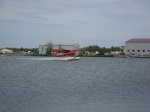
- Cessna 182 at Fort Hood Seaplane Base, Alaska
-

- Valdez Harbor Merged Photo
-

- Dempster Highway Merged Photo
-

- Outside Cantwell Merged Photo
-

- Outside Cantwell Merged Photo
-

- Denali Highway Merged Photo
-

- Denali Highway Merged Photo
-

- View of Alaska from our jet on the way home.
The following morning dawned with decent weather and we walked to the Golden Corral near the hotel for breakfast. Believe it or not, Kim loves Golden Corral. Really! She had a hearty breakfast and I enjoyed seeing her enjoy it so that brightened the morning a bit. Well I thought to myself, that’s going to be the highlight of the day.
We walked back to the hotel and jumped on the bikes for the ride over to the shipping agent. We offloaded the bikes and took a few moments to take stock of our situation. Our two little trusty steeds had indeed done an excellent job and performed admirably. Kim’s Suzuki DR650 and my KTM 640A never missed a beat in over 2,400 miles of pavement and gravel riding. To be precise, they covered 2,430.1 miles with over 900 (almost 1,000) of that being on gravel. They hauled a pretty heavy load including the riders, their riding gear, survival equipment and camping equipment.
Not once did they sputter, stall or break down. They carried us through torrential rains, deep mud, asteroid sized gravel and did not so much as cough. The were filthy, covered in dust, mud, and the Denali and Dempster Highway’s calcium chloride. If you are not familiar with it, calcium chloride, is sprayed on dirt roads as a dust preventative. It is slippery as snot when wet and almost impossible to remove once dried. In fact, years later, there’s still traces of it on Kim’s DR’s exhaust.
Nonetheless, these two trusty machines carried on without complaint. The least we could do was give them a quick wash before boxing them up for the long journey home. So we did. The cleansing process helped ameliorate some of my dour mood and washed away some of my angst. The physical contact with the machine and the slow rubbing, scrubbing and rinsing that was necessary to remove only the top layers of grime was like a balm to my raw feelings of having to leave; and in some way, I got the feeling that the bikes felt better too.
Rinsed and ready for crating, we rode the bikes back to the agents and got a taxi to the hotel. There we sat in the room wondering what to do with ourselves until the following afternoon. It was not more than twenty minutes when the phone rang. It was Tracy, the gent who sought us out in Dawson City and whose acquaintance we had made only as a result of a conversation we had with a couple we met in front of Mt. McKinley.
Tracy lived in Eagle River. a town just outside of Anchorage. He knew we were headed out of town the following day, but wondered if we would like to go for a ride with him and his wife MaryLee today. Damn! We had just dropped the bikes off at the shipping agents and they were probably already well on their way to being crated I told him. I think Tracy could hear the despair in my voice because he immediately said, “That’s not a problem, my brother Chuck has plenty of bikes and he can lend you both one!”
Well I don’t smile with my teeth showing much, but in this case Kim immediately knew something was up and asked what was making me smile so much. I told her and almost immediately her expression matched mine. Two Cheshire Cat grins coming right up! We immediately jumped into the rental car and drove to Tracy’s house. We got the nickel tour and headed over to his brother Chuck’s house. He had a fine collection of bikes. Chuck said, “Choose one.” Yikes! It was difficult to choose, but ultimately, I chose his R100RS PD and Kim chose his R/65GS. They were great machines.
Before we knew it we were off and riding as a group. We rode through beautiful mountain scenery and some awesome horse country in the Matanuska Valley. Then we headed over to Hatchers Pass where we took a brief ride into the pass but were forced to turn back due to poor road conditions. We then headed over to a most unusual Alaskan farm. What’s unusual about an Alaskan farm you may ask? Well how about if the farm grows musk oxen? They are indeed unusual creatures. Raised for their fur which is very warm, they are quite large, sound like tigers when they vocalize and can be quite aggressive when provoked. They were very interesting animals.
We spent an excellent day just wandering around Alaska and before we knew it, it was time to return the bikes to Chuck. Little did we know it, but he had one more surprise waiting for us. When he arrived he showed us his beautiful Ural sidecar rig and literally insisted that we take it for a ride. Who were we to argue? So we jumped on with me as the “driver” and Kim as the passenger. It was a blast for me. As for Kim, I don’t think she was as amused as I was. I had never piloted a sidecar rig and with changes in power, the bike changed direction somewhat. So as we made our way down the road, we also made away across the road. While I had the huge grin, Kim had the worried, I hope I survive fake smile on. But she is a trooper and came through with flying colors (and uninjured I might add).
More quickly that we could imagine, the riding day was over and we had to say goodbye to Tracy, MaryLee and Chuck. They had made our last full day in Alaska a wonderful day instead of a downer. We still cherish our friendship with Tracy and MaryLee to this day and even went on another trip with them which you’ll hear about in another article. After many goodbyes, we got into the rental and drove back to the hotel to catch some sleep and get ready for the next day’s flight.
When the following morning dawned, we had reconciled ourselves to the fact that we were leaving Alaska. We grabbed breakfast and Kim was once again in her glory at the Golden Corral. Tracy and MaryLee knew that I was a pilot and mentioned that there was a seaplane base and an aircraft museum next to the airport that we could visit if we wanted to kill some time before our flight home. So off we went and we watched seaplanes taking off and landing for a while. While I have several “ratings”, I do not have a seaplane rating and watching them only increased my desire to get one. Watching the bird get up on the sponsons and then break contact with the water was exciting as was watching them glide easily and smoothly onto the water’s surface, some more smoothly than others.
We then walked over to the museum and learned a bit about Alaskan aviation history and how much a role aviation plays in Alaska. Not only did they have historic displays, they also had static displays of various aircraft from fully restored and flying to in need of restoration and in pieces. It was all very interesting and a great way to spend the morning and early afternoon.
But before we knew it it was time to head to the international airport for the flight home. We had spent the morning with small aircraft which do the day to day job of ferrying everyday Alaskans and their goods from point to point. These aircraft are literally the lifeblood to many remote Alaskan communities. It was similar to our small bikes on our journey. They had carried us and our gear from point to point and provided us with the marvelous opportunity to observe some of Alaska and the Canadian Yukon. We hope that someday we will be able to once again journey to Alaska and the Canadian Yukon and like Alaska’s small aircraft travel all over Alaska on our little motorcycles that can.
Over The River And Through The Woods To Adventure Ride We Go
It was a lazy weekend day in more ways than one. The temperature outside was warm and the sun was in and out of the clouds. Not too sunny and hot and not too cold, it was just right. I too was lazy in more ways than one. It was about 10:30 AM and I was still in my sweats and a t-shirt padding around the house planning how I might round out the rest of the day doing nothing.
That plan however, was soon to go astray, to my good fortune. For coming up the road, first softly but then more insistent was the sound of single cylinder motorcycles heading up our gravel road. Hmmm… I wondered. Who was going to go play on the class four road at the end of my gravel road? There were lots of downed trees and mud, it would be quite a challenge to run that I thought to myself. But as I daydreamed about who might be taking on the challenge, the sound of the bikes became louder. Not just louder as in closer as they passed my house, but louder as in they were coming up my gravel driveway.
It must be Fredo I thought, and as I scurried to the windows at the side of the house, I found it was indeed Fredo and another friend Joe. Fredo on his KTM 250 XCF two stroke and Joe on his KTM 690E four stroke. Awesome was my first thought. So as I semi-ran down the stairs to greet them, my second thought was, I think I may be going for a ride today! And ride we did. It was great, I’ll tell you all about it shortly.
But first let me tell you about Fredo. If you’ve ever wanted a riding buddy, someone who you could ride with just to go out and have fun, it would be Fredo. That definition doesn’t extend just to the riding times either. On and off the bike, Fredo’s the kind of guy that just hanging with is a joy. Always with a smile and something good to say about everyone, Fredo is the epitome of the guy you want as your friend.
Oh, and Fredo can ride, FAST. Although he claims there are other guys much faster than him, Fredo is one speedy and accomplished muchacho. For example, I was at the KTM shop where we both bring our bikes for service. I was talking to one of the techs about how Fredo kicks my butt each time we ride in the woods and he quickly added, “Hey, I’m in my 30’s and I can’t keep up with him.” Well dear reader, I’m here to tell you that I’m in my 50s and I can’t even stay near him when he’s on the gas. The truth be told, when I’m quickly vanishing in his mirrors, he’s probably not really on the gas for him. But he’d never say so. Oh well…
But that brings me to the point of this little article. I’ve been riding with Fredo for about 3 years or so now. We’ve ridden some pretty cool terrain. We’ve done wide gravel roads, we’ve done single track woods, we’ve done mud, water crossings, rutted hills, ridden in snow, over rocks, leaves, you name it we’ve ridden it. In riding with Fredo, I’ve learned a lot. More than I would have learned riding by myself in many, many years.
Sometimes, it hasn’t been very easy and frankly, I’ve fallen off quite a few times trying to keep up. In fact, on this particular ride, I had my first inadvertent off trail excursion. Coming down a hill with the speed up (for me) trying to stay with Fredo and Joe, I somehow managed to lose the front end and off the trail and into the woods I went. It was one of those moments when you get religion real fast. They say there are no atheists in foxholes, and I can now add another place. There are no atheists on careening motorcycles headed off trail into the trees.
Luckily, I did not have communion with any trees and the only injury I received was a severe bruise to my already battered ego. But once again Fredo came to my rescue. Noting that I was not in sight, he turned right around and found me off trail in the woods. He wouldn’t even let me ride out. Noting that I was pretty winded, he basically took my bike away from me and hand manipulated it back onto the trail which was no easy feat since I had gone down an embankment several feet.
What all of this leads me to is to tell you that you need not go a long distance to get adventure in your riding. The single track, woods riding, water crossings, mud, rutted hills, all the different and challenging terrain each present various forms of adventure. Take advantage of it when and where you can. This particular ride only lasted 3 or 4 hours but gave me a significant sense of adventure. It will do the same for you if you let it. Get out on some terrain that challenges you. Make it a bit of work and learn some new skills. You’ll be better off for it and with your new found skills, you’ll be able to conquer that kind of terrain when you go on that long “cross-country” adventure ride, or find yourself on terrain that you hadn’t expected. Bring a friend along who hopefully has better skills and learn together. It will be fun, you can count on it.
I would say you could ride with Fredo, but he already has enough of a challenge with me.
Ride2Adventure – Shrink the Planet, One Ride at a Time
Shrinking and Sharing The Planet Through Adventure Travel
A new private message arrived in my ADVRider email account and I opened it with unbridled anticipation. You see, the message was in response to our listing on the “Tent Space” thread where we offer food and lodging in our home to adventure riding motorcycle travellers. We’ve hosted travellers in our NH home from as far away as Australia and we’ve enjoyed every minute. We’ve generated new friendships and been able to share a bit of our country with people from other parts of the world.
It turns out that this traveller was not from very far away, in fact he was from Brooklyn, NY. He was finishing up a three week sortie of the Trans Labrador Highway, Newfoundland and Nova Scotia. Awesome! The Trans Lab loop was one of our favorite rides which we had last ridden 2007. We were anxious to meet the rider, hear about the Trans Lab and what he experienced during this trip.
We emailed our potential guest back and told him that we would be delighted to have him come and stay with us. We had a few back and forth contact emails and around 10:00 PM as we sat around the fire pit of our little VT getaway home, we could hear the familiar sound of a single cylinder motorcycle coming up our gravel mountain road.
We left our little fire and greeted our guest Ben Recchi. What a great person. We fed him some dinner since he hadn’t eaten in quite a while and had been on the road since early in the day. We stayed up and chatted until well past midnight talking about the Trans Lab, his and our travels, where we’d been, what we’d seen and where we’d like to go.
It turns out that Ben had been to many other places on a bike, including Central America more than once. To do so, he learned Spanish and was capable of communicating with the people he met. This made his journey more enjoyable and helped him share a little about himself with the communities he came in contact with. He really enjoyed Central America and said he would be happy to return.
We told him about our experiences and where we had been and a little about what we had seen. We briefly discussed our trips to Ushuia, Iceland and the Trans American Trail and we all agreed that riding to different parts of the world was an excellent way to learn and share. We probably could have talked longer, but it was getting late and Ben had to get back to Brooklyn and we were pretty tired. So we all adjourned for a good night’s rest.
The following morning, we chatted some more over breakfast and found that we were all also MotoGP and Formula 1 fans. Wow, another thing in common. Ben had planned to leave fairly early in the morning but when I told him that I had DVR’d the MotoGP race, I was able to convince him that he should stay a while longer and at least watch the race with us. With the remote and the skip commercial button, we could get the race watched and done in less than 45 minutes.
So we sat in the living room and watched the race together, commenting on what was happening in the race and the championship, who was going where at the end of the season and all the fun things that fans discuss when they are enjoying their sports of choice. It was like having a long term buddy in our living room, not just someone we’d met the evening earlier.
So after the race was completed, the victor announced and the trophies handed out, Ben started to pack for his final leg of his three week journey. We helped him load up his bike, took a few pictures of our new friend and wished him safe travels on his way home to Brooklyn. It was with real regret that I watched him motor down my driveway and onto the gravel road down the mountain back towards his home in NY.

We had made a new friend and shared some mutual experiences. We found much in common in the less than 24 hours that we shared together. We broke bread together and learned about each other, all in the spirit of friendship and sharing that is brought about by adventure motorcycling. What a great way to learn about other people and shrink the planet. Although in this case Ben was not from a far away land, we did share and we did make a new friendship. We were invited to come and visit him in his home when we came by his way.
So even though the distances between our respective homes was not great, I believe that the sharing that we did together did indeed…
Shrink The Planet, One Ride At A Time.
Get out there and shrink the planet a bit, please.
Transiting The Trans Labrador Highway & Canadian Atlantic Provinces (Part 8)
Before we could make it to Lunenburg, we had an intermediate stop in the small seaside town of Charlos Cove. We were headed to a little inn called the Seawind Landing. Right on the water with great places to beach walk as well as grassy lawns to sit and stare at the ocean it was a wonderful place to hang out. To top it off, they had an excellent little restaurant with home cooked food and a nice wine selection. This was definitely going to be our “high-end” stop for the trip.
Traveling over the very bumpy and sometimes grass filled roads, we made our way towards Charlos Cove. The sky was bright blue with white puffy clouds seemingly racing us as we made our way to our destination. Some were fairly low and as we made our way up and down ridges and hills, I could see their shadows as they floated and squirmed their way across the pavement. They looked to be in a hurry to get somewhere but were relegated to moving in a straight lines. Although they can fly, I wondered if they wished they could traverse the twisties with us instead of flying straight. Were we clouds, it would a be a wonderful but tragic fate; to fly with the wind but be doomed to an unchangeable course set by it.
(By the way, if you click on any one of the pictures, a full size picture will open and you can then scroll through the entire gallery of pictures in full size in any direction.)









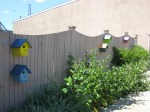
It was a long and bumpy ride, and by the time we reached our destination, we were pooped. Saddlesore and tired, we were more than ready to get out of our gear and have a nice quiet dinner and grab some shuteye. We unloaded our bags from the bikes and Kim normally quite resolute about long rides, said that the ride was so bumpy and filled with grass filled cracks, she’d almost have preferred to have ridden her dirt bike.
We were however, rewarded with a wonderful dinner, a room overlooking the ocean and a spectacular red sunset. Thoroughly satiated, we hit the rack for a great night’s sleep and a lazy rest day. We generally lay and sat about doing a bunch of nothing, reading, lounging in the Adirondack chairs in a grass covered field while taking in the sun and enjoying the day. But it couldn’t last forever and around 2:00 in the afternoon clouds began to gather. Shortly thereafter, the sky became grey and dark and a heavy rain shower began.
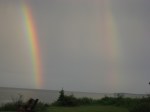
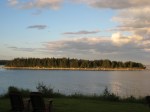
But it was just another beginning because it seemed like as suddenly as it had started, the skies began to clear and we were treated to a double rainbow and freshly scrubbed salty ocean air as the sun began to set. In doing so, its light cast a warm golden glow upon a nearby island and we sat and watched the end of a lazy perfect day.
The following morning we packed the bikes and headed towards Lunenburg for our actual destination, the Ovens Natural Park. Owned by the Chapin family, (yes if you know of the singer Harry Chapin, it is indeed his family that owns the Ovens) the Ovens is a combination campground (with rental cabins available), nature walk, sea cave exploring, and music wonderland. Right on the ocean not far from Lunenburg, the Ovens allowed us to get to know a bit of Canadian life, enjoy the ocean, walk the beach and explore several caves that run right out to the ocean.
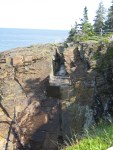
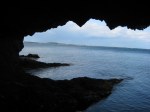
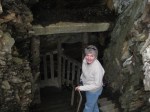
We took half a day walking the nature trails which wandered among the sea cliffs and led to the entrances of the sea caves. There were beautiful views and paths that led directly into the caves for exploring. The caves are called the Ovens, which is what they look from the outside from the sea; hence their name.
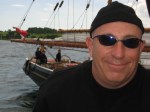
Around noon, we headed into Lunenburg and were lucky enough to arrive just in time for the arrival of a Canadian national icon, the Bluenose. She was arriving into port with a full cannon salute and bagpipes piping. A crowd was anxiously waiting on the dock for her arrival and many camera were raised to take photos of the Canadian icon returning to its home port.
We quickly parked the bikes and joined the crowd. It was evident that there was a lot of pride in the Bluenose and it was great fun to be part of the crowd. With the Canadian flag proudly flying from her middle mast she majestically glided into the dock to great fanfare. Up close we could see that she was indeed a beautiful vessel, trim with sleek lines, a true portrait of the speedy racing ship that she was known and loved to be.
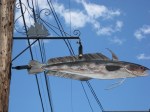
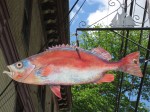
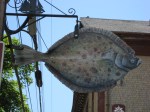
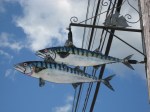
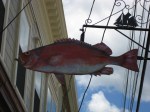
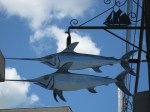
We took a few pictures of our own, chatted with a few people and decided to take a walk around Lunenburg to experience its sights and sounds. Lunenburg is known to be a bit of an artists colony and it did not disappoint us one bit. During its history, Lunenburg was a fishing town. Although the fishing industry is no longer its main source of income, its heritage has not been forgotten. As we walked down one of its main streets, we looked up at the street lamps and saw that they had been decorated with large, hand cut and hand painted metal fish of the Atlantic. They were great. Each light post had a different fish and they were in the fish’s actual colors. It made us want to walk the length of the street just to see the different fish!
Wandering along the streets of Lunenburg, we were treated to many galleries, shops, restaurants and even a museum. It was a grand afternoon of walking, visiting and just plain enjoying the sights, sounds and people. But the sun was rapidly sinking and it was time to get back to the Ovens before dark. We jumped back on the bikes and enjoyed a sea side setting sun ride back to our cabin. It had been a great day and we were looking forward to tomorrow. We had a fairly long ride to the tiny island off the coast Nova Scotia named Brier Island where we’ll take you in part 9.
Transiting The Trans Labrador Highway & Canadian Atlantic Provinces (Part 7)
We awakened to falling rain and fog. Our foggy heads cleared quickly, but the fog and rain outside refused to do the same. We resigned ourselves to more riding in the rain and reduced visibility, but that is part of the adventure isn’t it. We were more disappointed that we would be missing scenery along the way to the ferry at Port Aux Basques. Unfortunately, we didn’t see much for most of the ride, but as we approached the ferry, the rain did stop and visibility did increase somewhat.
Although the weather obscured the traditional scenery, we were in for a treat when the ferry arrived in port. Out of the fog, a giant ghostly shadow appeared. Moving slowly, it glided silently towards us with a nearly imperceptible rocking motion. We knew it was a ship, but we couldn’t clearly make out any detail. As it approached, it blew its horn and there was no doubt it was a large vessel. Then out of the gloom we made out the blue, white and gold of the MV Caribou. Although it was a very large vessel more than 565 feet in length, her impressive form glided more like giant kayak across the calm harbor waters than a ferry capable of carrying 1,200 passengers, 370 cars and 77 trucks.
Just as we thought she would pull into the dock and tie up, she gave us a special treat. What we hadn’t noticed was that the vehicles entered and disembarked from the rear of the ship. The Caribou was headed straight into the dock, so how would she unload her cargo. Ahhh…. A 270 degree turn would be necessary in the very narrow harbor.
So as easy as pie, the Captain of the Caribou turned his gigantic vessel around in the middle of the small harbor with very little clearance. It was an awesome display of seamanship. You want to see it? Well, OK…..
After a successful docking, we were able to load the bikes onto the Caribou for the ride to Nova Scotia. It was a smooth uneventful trip and before we knew it we were being discharged on the shores of Nova Scotia around midnight local time. Of course it was raining again and finding our hotel was a bit of a chore, but find it we did and we dropped into the rack to sleep the sleep of the dead.
Viola! We awoke to bright sunshine with only a few clouds dotting the sky. What a wonderful change! Having heard about the beauty of the Cabot Trail and the twisty roads that surrounded it, we made a beeline for the reportedly smooth pavement running along side the mountains and ocean. We were not to be disappointed; not one iota.
On narrow, bumpy and mostly deserted roads, we passed many small towns which seemed to have one thing in common; wonderful people. During our brief stops, or our overnight stays, it seemed that everywhere we went people greeted us and wanted to chat. All the greetings were warm and welcoming, we often felt like lost relatives. They wanted to know about us and they often told us much about their families and themselves. This give and take is in our opinion what true adventure riding is all about. We were really not all that far from home, but we were learning much from the folks we interacted with and I think we got a true feeling of what it was like to live in the Canadian Atlantic Provinces.
As welcome and comfortable as we were, we hightailed it towards Cape Breton and the Cabot Trail. The blue skies, clear blue ocean and sinuous mountain roads beckoned to us. As we rolled along the road that paralleled the bright blue ocean, we passed the tiny town of Wreck Cove and immediately the mountains which mark the beginning of the Cabot Trail became visible.

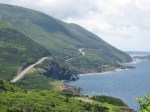


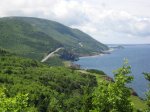


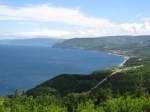


We could see the steep and twisting road immediately in front of us. A sharp hairpin turn led to the steepest part of the road that clung to the side of the mountain as the ocean lay calmly hundreds of feet below. There was only one thing left to do and it was to ride that road. And ride it we did. The road was steep enough at the beginning that we used first gear for the a significant portion of the climb. It was a bit interesting to be riding this twisting road only a couple of feet from the guard rail that was the only barrier a several hundred foot drop to the ocean below. But nonetheless, the view was spectacular.
As we crested the first ridge of the mountain, we lost sight of the ocean, but the pavement became very smooth and we were able to enjoy some twisties on a smooth surface. We both hooted and hollered into our communicators and told each other how spectacular the riding was and how much we were enjoying Nova Scotia. Although we were enjoying the twisties, we did take the time to stop and enjoy some of the spectacular mountain views along the top of the mountain pass.
Later as we began our descent from the top of the mountain, we were treated to another set of twisties, this time even more exciting than at the beginning of the day. Hairpins and decreasing radius turns awaited our eager throttle hands and wide open eyes. But this wonderful steeply descending road presented us with a significant dilemma. The problem was that the twisties were so technical that we dare not take our eyes off the road while navigating each corner. So you say, why would that be a problem? The problem was that just beyond that guard rail were the most amazing views of the north Atlantic you can imagine. The bright blue sea met an equally dazzling ocean and where they met at the horizon, it was as if the two were merged into one. The decision as to which to look at was mind rending.
But as we laughed to each other over our communicators, “someone has to do it,” we started down quickly scanning from road to sea, road to sea. If you know anything about instrument flying, it was an exercise in scanning. Don’t stare at anything, keep moving your eyes, soak it all in to your brain and make the correct control inputs. It was a test, but a wonderful one at that.
As the road straightened out a bit, it still provided awesome views of the ocean and of itself as it undulated up an over little ridge crests alongside the sea. To your left, green trees sprouted from the sheer mountain walls while to your right, the ocean vied for your attention. It was an amazing test of willpower just to stay on the road.
The mesmerizing ride took away all realization of time for us and before we knew it, we had completed the Cabot Trail and were headed back inland across the peninsula towards Lunenburg. A very lovely town with an artists flair, we were treated to more local sights and flavor. We’ll take you there in Part 8.
Transiting The Trans Labrador Highway & Canadian Atlantic Provinces (Part 6)
With significant regret we left our roadside whale watching motorized perches and rode on towards Blanc Sablon. I was somewhat gloomy leaving such a sight, and the darkening weather matched my mood. Overhead clouds were gathering and the skies brooded and darkened. By the time we reached our hotel, a cold misty fog surrounded us. We were looking forward to a nice warm room and a hot dinner. We were able to accomplish both and fell into the rack for a good nights rest.
-

- Iceberg on the way to Newfoundland
-

- Outside Gros Morne National Park
-

- Gros Morne
-
- Gros Morne
-

- Moose at the side of the road
-

- Approaching Rocky Harbor
-
- Snow on the mountains outside Rocky Harbor
-

- Entering Rocky Harbor
We awoke to overcast and heavy rain. It seems like each time we visited Newfoundland it rained and it looked like this visit would be no different. I dressed and we packed our bags for mounting on the bikes. It was while I was mounting the bags on our bikes that an older gentleman approached and quietly watched for a while. I clearly remember him. He was wearing a clear raincoat and a yellow Gloucester fisherman’s hat. I noticed he was wearing a Cessna belt buckle and he had the pilot’s wrinkles around his eyes from squinting into the sun. Just by looking at him, I could tell that this man had had some adventures of his own. Nearby, a tour bus idled its rough and slow diesel drone and he looked at it disdainfully. He would then watch me packing in the rain with a look of longing and desire. It truly appeared like he was ready to jump on and ride
After a while, he walked a bit closer and asked where we were headed and where we had come from. I told him that we had ridden from our house in New Hampshire and we were headed to Newfoundland. We chatted a bit about the trip so far and what the Trans Labrador Highway had been like. While we stood there in the rain, he looked me in the eye and looked over to the bus he would later board and he said, “I wish I was traveling with you.” You know what, if I’d had the space on the bike, I would have taken him along. Pilots have to stick together you know.
Before we knew it we were in line for the ferry getting ready to ride churning grey misty seas. Finally this signal was given and we rode our bikes aboard, tied them down and made our way to find some seating for the trip. Even though the trip started in the morning, the entire ride was dark and rainy. A few ghostly icebergs silently passed in the distance their silhouettes a grainy shadow against a backdrop of white-capped grey and green. A few whale and dolphins passed, breaking the water’s surface, spouting and seemingly pointing out the way. It seemed that in no time, we had arrived in Newfoundland and it was time to disembark and start our Newfoundland part of the trip.
Unfortunately, for most of this journey through Newfoundland, poor weather surrounded us and we decided to make a beeline to our first destination near St. Anthony, the Glacier Manor Resort. Now closed, it was a wonderful little place being built by a couple; John and Edna Simmonds using their own two hands. Dinner was home cooked by Edna while John literally serenaded us on the guitar while we ate. It was terrific. We sat and chatted and discussed the US and Canada and before we knew it we had transitioned from acquaintances to family in the breadth of a few short hours. Together with John and Edna, we’d been able to shrink the planet a little more on this trip. Wonderful!
We went out for an early evening walk in an attempt to see some moose. As the sun set, we came across a pair of very large great horned owls. One flew off quickly and the other stayed for a while and watched us watching him. We remained very quiet and did not make any quick movements or loud noises which might scare him off. Finally he had had his fill of watching us and as he flew away. But as he did, he left us a gift of one of his large feathers which we still have to this day. It was if he were saying, thank you for not disturbing us. For doing so, I leave you a part of me to remember us and Newfoundland by.
As the sky grew darker, we walked towards the more open fields and waited for the moose to come out. They did not disappoint us. They came out in fairly large numbers and quietly and calmly walked across open fields looking for some snacks. We watched in amazement wondering how such large animals could move about so silently. We watched for an hour or so and headed back to the resort for a good night’s rest.
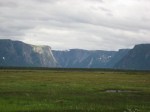
Come the morning we made our way towards Newfoundland’s table top mountain National Park Gros Morne. It was green and gorgeous. Sheer walls of green with bare spots of rock shot straight up. Not to points, but to vast flat table tops that stretched for miles. Surrounded at the base by trees, as they rose, the mountains lost their leafy cover and instead were covered in huge patches of velvety green moss. The moss often undulated up the sides of the mountain giving the slope a wavy texture until reaching the table top. They were extraordinary sights.
While we stared at the table topped mountains, we were also treated to ocean view stretches. We rode alongside twisty two lane ocean roads with clouds racing perpendicular to our course. Fresh air treated our senses with variety. When the wind blew from the sea, it was sweetened with the brine of the deep. When if came from the land, it was pungent with pine. This ride had turned into a truly sensory delight.
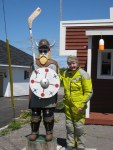
We made a brief stop for lunch in a small town called Port Aux Choix. It was a charming place and it was clear that we were in Canada. One of the locals had hand carved a Viking statue and outfitted him full hockey gear including stick and shin guards. Of course, because he was cool, he was also outfitted with some rather trendy shades. Of course, we had to take a picture with him.
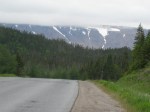
Continuing our southward ride, we made our way towards Rocky Harbor. To get to there, we again found ourselves on narrow twisty mountain roads with mountain and ocean views. At the higher elevations, snow was still on the ground and it was mid June! Along the way we spotted moose grazing and running alongside the road during the day. Beautiful to look at, but also an important reminder to be alert when rounding corners.
Rocky Harbor turned out to be another small town surrounded by mountains and the sea. When we arrived they were having a local regatta, and the townspeople were out and about in all sorts of small craft plying they way all over the harbor. It was a day of community on the water. We enjoyed the festivities for a while, but we really had to get going for our time was running short. The following day we had to be in Port Aux Basques to catch the ferry to Nova Scotia.
Arriving at our little hotel, which consisted of several separate little cottages and a restaurant, we caught a quick dinner and turned in for the night. Before we fell asleep the rain had begun to fall and tomorrow looked to be a damp ride to the ferry to Nova Scotia where we’ll take you in Part 7.
Marc Coma Takes A Poduim in the Baja 500, Honda Winning Streak Broken
From Ultimate Motorcycling
MRW rider Marc Coma has added another achievement to his already impressive resume, taking third place in the Baja 500 team competition held in Ensenada, Mexico, this past weekend.
The 450 mile (724km) rally pitted three-man teams against one another. Coma’s KTM USA squad was completed by Mexican rider Iván Ramírez and US representative Mike Brown.

Marc Coma (MRW Repsol KTM) says: “I am very happy with the experience; riding in a team event has been really positive for me. Discovering new things always allows you to improve as a rider and I had a really good team behind me: Both in terms of machinery and personnel.
“We had problems with the bike due to a crash and couldn’t take any risks after that, because we needed to conserve tire life and finish the race. In any case, the result is a good one.”
Owing to a big crash during Ramírez’ first stint, the team’s sole bike was badly damaged and they were only able to trail the leading outfits. An exhaust pipe of the KTM 450 enduro machine used had to be changed as a result of the fall. The bike is a smaller and more simple version of that used by Coma in the Raids World Championship.
Marc Coma’s expertise in navigation was not needed for this event, as the Baja 500 features markers along the course and not the road book typically used in Raids and rally competition.
Mike Brown was the rider for the second stint and he managed to cut the gap to the leader, whilst also gaining positions in the overall standings. The crash had affected the bike severely, which created some constant mechanical issues right up to the end of the race.
The final stint was undertaken by Coma, who started at a speedy pace but resisted the urge to take risks with tire preservation such a key factor. The MRW rider rode the coastal route which was divided into two very different sections: The first was a tricky, mountainous run, the second a quicker, wider route similar to familiar competitions like the Dakar Rally.
The trio of Robby Bell, Steve Hengeveld and David Pearson were the winners of the Baja 500 onboard a Kawasaki, completing the race in a total time of 9h 10m 03s. Two minutes and twenty-eight seconds behind were Honda riders Cotton Udall, David Kamo and Timmy Weigand. KTM USA and Marc Coma rounded off the podium, close to seven minutes off the winners.
The next event for Marc Coma will be the fourth Raids World Championship race, held in Sardinia from June 23-28. The Spaniard currently leads the series.
2012 Baja 500 Final Results: 1. R. Bell, S. Hengelveld, D. Pearson 2. C. Udall, D. Kamo, T. Weigand 3. M. Coma, I. Ramirez Jr., M. Brown
Forced Marriages – Do they work?
Forced marriages? What does the topic of forced marriages have to do with motorcycling or adventure riding? Have they lost their minds over there at R2ADV? Not really, for the most part. But what brings this topic to mind is the recent purchase of motorcycle manufacturer Ducati by automobile manufacturer, Volkswagen, AG through their division Audi for a reported $1.13 billion USD. Many financial analysts have questioned the purchase as making no business sense, saying that there is no concrete business case for the purchase.
So why would Volkswagen/Audi (let’s just call them Audi for now on) a German automobile manufacturer known for precision engineering, spartan, efficient, and practical transportation want to purchase Ducati, an Italian, motorcycle company known for beautiful design (sometimes at the expense of functionality), passion and racing prowess? Can the two heritages be aligned and successfully combined into one big happy family in this apparent shotgun marriage?
Well the conjecture is that Audi wanted a trophy in its cabinet and its purchase of Ducati certainly represents a big shiny one. Huge racing heritage, cutting edge styling and maker of perhaps the most iconic motorcycle ever to be manufactured, the Ducati 916. In addition, prior to the purchase, Ducati had been recently leveraging its racing heritage and begun moving and promoting its brand image to and even wider audience.
With the introduction of the Streetfighter, Hypermotard, Multistrada (version 2) and most recently the Diavel, Ducati had moved from a racing company to a full market motorcycle company. But, and this is a big but, styling has always been a HUGE priority with Ducati even over cost, functionality and dare it be said, winning races.
But the question remains, how will Audi reconcile this styling priority with its engineering practicality philosophy? Can/will Audi listen to the Italians when they say but this design is beautiful, you shouldn’t change it? Will process and engineering controls overwhelm passion and styling at the new Ducati?
This brings me to question what the new Audi/Ducati might do to their adventure bike; the Multistrada. Ducati, so fixated on performance, installed the engine from their world class superbike, tuned for torque, and fit it between excellent suspension. Based on all this power, suspension adjustability and perhaps styling, Ducati decided to mount a solid cast 17 inch front wheel. This is not an optimal wheel for off roading, but it certainly looks swoopier and handles better on pavement and at high speeds. Ducati just could not force themselves to fit a 21 inch front spoked wheel which probably couldn’t handle the projected power of the Multistrada, nor does it look especially nice. Especially limiting is he fact that no tire manufacturer made a “knobby” tire in 17 inch rim sizes. In fact, Ducati had a tire made by Pirelli especially for the Multistrada that they hoped would fit the adventure mission.
It was not a hit with the off road community. In fact, it was the reason I sold my Multistrada. It just really didn’t want to be an off road bike. It was an awesome machine on the pavement, but anything more than wide gravel roads were a chore for the bike. I should have known that from the start with the 17 inch front wheel.
So what will the new Audi/Ducati do? Will the new company use the Audi approach and fit the engineer’s choice 21 inch front wheel or stay with the 17 inch wheel. Recently, Continental Tire came up with a true “knobby” for the 17 inch rim so now the Multistrada has a knobby tire available. They are “low profile” knobs, but they are knobs. Will that be enough, or will the new Audi/Ducati start anew with a new design and a fresh sheet of paper, throwing away the Italian legacy?
Interesting question eh? I did find that Wunderlich, a german motorcycle accessory and tuning company had been working with Continental and developed this machine based on the BMW S1000RR. (picture from Motorcycle USA)

It’s an interesting looking machine to say the least. Wunderlich has no relationship with Audi that I am aware of, but does this impart an idea of German thinking? Such a comparison is pure conjecture, but it’s interesting to think about.
Well the jury is not only out, it’s yet to be selected. But once selected, it will be interesting to see whether this forced marriage betweenVolkswagen/Audi and Ducati is given the thumbs up of survival or the thumbs down of business failure.
Sidi Adventure Goretex Boots – Mid Term Update
It’s been a little over a month since I wrote my initial impression of the Sidi Adventure Goretex Boots. In that time I’ve had easy pavement and gravel rides lasting for hours as well as some fairly spirited single track woods riding with friends and can say that the Sidi Adventure goretex boots have come through with flying colors. Smooth tarmac, loose gravel, mud, rocks, water crossings small fallen trees and hidden obstacles have all been easily dispatched by the watertight armored boots that can.
So what do I mean by all of this? Well on the pavement, smooth gravel and just plain walking about where outright boot performance is not put to the test and comfort is the deciding factor, the Sidi Canyon goretex boot has been up to the task and the more appropriate choice. On the other hand, the Sidi Adventure goretex with each wearing, seems to become more and more comfortable. I would not rate it as comfortable as the Sidi Canyon goretex, but comparing the two is like comparing an armored car and a tank. Both can do protective jobs, but you’d only really bet your life on the tank in all out war.

The Sidi Canyon is the armored car, protecting you from small arms fire, like light gravel roads and the average rain storm. The Sidi Canyon gortex is the M-16 tank, capable of securing the troops from all sorts of mayhem, such as big rocks, trees, water crossings and the like. The trade off is that you are a bit more cramped in the tank than in the armored car, but when you need to protect yourself at all costs, bet on the Sidi Adventure goretex boot.
One thing I really like about the Sidi Adventure goretex over the Sidi Canyon goretex is the stiffer sole. Not that noticeable while walking, it is immediately noticeable while standing on the pegs, especially when taking any hits. Far less jolt is transmitted to the feet and to my 50+ year old feet, that is a godsend. For some, that may represent a tradeoff in “feel”, but if you’ve ridden in motocross style boots, there will be as much if not more feel in the Sidi Canyon Adventure than in a pure motocross boot. However, if you’ve only ridden in street boots, you’ll notice the extra stiffness and that may take some acclimation time. It should be no big deal.
There have been reports of squeaking with walking but I’ve yet to experience it which is a good thing. I’ve read reports that if it does occur, WD-40 or such lubricants will stop the noise, but the downside is that they generally dry up and would require reapplication. However as I said, I have not experienced any squeaking in over 3 months use to date.
The Sidi Adventure goretex boots are also fairly heavy, significantly more than your average street boot. But if you are going to buy the Sidi Adventure goretex boot, you should be a more off road oriented rider, otherwise you are wasting your money. You’d be better served buying the Sidi Canyon goretex which is less expensive and more on road oriented.
So when all is said and done, are the Sidi Adventure Goretex boots worth their significantly lofty price? For those people who spend a good deal (i.e. more than 50% of their time on gravel or off paved roads, but still want a boot that is comfortable and usable on the street; the answer is a resounding yes. They can be the single pair of boots that do it all for you. On road, off road, woods, walking about, these boots can do it all.
But if you do more than 50% of your riding on pavement, you may want to look at less expensive alternatives. The Sidi Canyon being one since they can do 75% of what the Sidi Adventure can do and is signficantly less expensive. In any event, you can’t go wrong with either of these boots; it’s just that to me, a more off road oriented rider, the Sidi Adventure Goretex boot represents a very smart choice.
Ride2Adventure – Shrink The Planet One Ride At A Time
SENA SMH-10 Bluetooth Motorcycle Communicator Eval
Communications are probably one of the single most important topics on trips that are undertaken that are not solo. To ensure that everyone understands what is intended, we must all communicate the plan and we must do it well. Well Kim and I have used a number of the two way motorcycle communicators and we’d like to tell you about our experience with the Sena SMH-10. Overall, we’re pretty pleased.
By way of background, the Sena SMH-10 is the first Bluetooth communicator we have used. Previously, we had used the Collett series of radios the last being the Collett Platinum 900. While we found the communicators to be good performers, we did not find their reliability to be so great. They do have a 3 year 100% warranty and Collett does honor their warranty well, but who wants to have the down time associated with yearly repairs which is what we experienced.

So back to the Sena’s. Overall we’ve found the range performance of the Sena to be pretty good especially considering that it is a bluetooth device. Sena claims a reception range of “up to” 980 yards (900 meters). We’ve found that the distance in unrestricted terrain to be somewhat less, perhaps 500 – 700 yards at best. Frankly, if you are riding with friends, how often are you more than a quarter mile from them? If you are going to be that far away, perhaps you should call them on the phone, eh? For us however, the real world test of performance is in more restricted space such as in the woods or around corners in twisty terrain. Here, the range of the Sena varies significantly.
If you are in the city and are several turns ahead of your riding partner cut off by buildings, range is signifcantly decreased. The same goes for being in the woods. The more dense the terrain, the shorter the range of the communicator. However, we can say with confidence that with all our adventure riding in non-densely wooded terrain, the Sena has given us totally acceptable reception. This is really important to me as I like to know how Kim is doing when we are in the woods and I don’t always have her in sight. I believe the same goes for her wanting to keep tabs on me. As far as range goes, we’ve seen as little as 100 yards in the woods, but frankly we were really buried in there. If you’re looking for a communicator strictly for the woods, you probably do want to look elsewhere though.
As you can tell from R2ADV, we have ridden all over the world and we ride in all sorts of weather and conditions. We are constantly riding in the rain. Pouring rain; as in downpours for hours. We continued to use the Senas in these conditions and we can report that the Sena did not suffer an water related failure in 2 years of use. That’s something that the Collett couldn’t claim. We ended up returning the Colletts 3 times in 3 years for repairs.
We also ride a lot of gravel and in very dusty conditions. Both in South America and during last years Trans American Trail ride, we rode extensively in very dusty conditions where visibility was almost nil due to the bike in front or an ocassional vehicle we caught up to or passed coming from the opposite direction. We literally were covered in thick dust at the end of the day and the Senas still worked flawlessly.
The Sena’s charge fairly rapidly. Ours are the V3.0s and the V4.0s are now widely available. The V3.0s will fully charge in 3 – 4 hours. Sena claims that the V4.0 will charge in 2. We can’t confirm that claim since as we said earlier, our experience is with the V3.0. but it seems a bit strange to this non-engineer that a firmware update would reduce the full charging time. Perhaps an EE can comment in our comment section and voice an opinion.
Ultimately, after two full hard years of use, we have experienced some problems with one of the Senas. One unit must be positioned just right to receive a charge. It seems that there is a poor connection inside the unit. In addition, the audio has become extremely distorted and has almost become unuseable. It transmits well, but the receive audio is so bad it is almost impossible to understand the incoming communication. Since the Sena comes with a 2 year warranty and these units are out of warranty. Unfortuately, we won’t be able to test Sena’s warranty support on the older failing unit. However, we do have a replacement pair that were shipped to us new in non-working condition, so we’ll let you know how Sena handles their warranty service as this plays out.
So when all is said and done, would we recommend the Sena SMH-10. The answer is a fairly enthusiastic yes with a couple of caveats. As long as you are not depending on the Sena SMH-10 for 100% woods riding, or very long distance communications, the Sena is a pretty good tool. Our experience has been with these kind of electronics, a couple of years use is about what you can expect to get for service. Priced at about $300 for a pair, they are not inexpensive, but for the communications, added bit of safety and overall communications, we think they are worth it.
We hope you found this review helpful.
Mike and Kim
Ride2Adventure – Shrink The Planet One Ride At A Time
Motorcyclists – Who Are Those People And Why Should They Share?
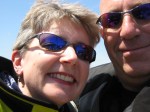
Having written R2ADV for a couple of months now and expounded on the virtues of recording your journeys so that you can recall them yourselves and also share them with others, a comment on a recent post has gotten me to thinking. After telling you all to do so, an anonymous poster commented that all the scenery etc. pictures were nice, but the one Kim and I would always allow us to remember the journey and the good time we had. Thank you anonymous poster!
So with that bit of wisdom, I had to think I failed to reinforce how important those recordings are to the person who takes the picture as well. Stopping to take the picture is not only for sharing with others, but for sharing with yourself later. OK you say, so what? Well, you might not look at that picture for years or you might look at it regularly, but if it re-kindles the passion for the ride that you took, then you have succeeded. Succeed in getting yourself out to ride and perhaps getting someone else excited enough to get out there as well. So that’s a big deal on two levels, that’s what!
It also dawned on me that we’d never properly introduced ourselves, or given you a taste of how we share our adventures. Frankly, we always ride together on journeys of any significant length, and almost always on shorter journeys. What could be better than traveling with your best friend eh? It’s with this thought in mind that I thought that I would share with you on two levels; the first level is an attempt to show how important taking pictures for later enjoyment and sharing can be. The second level is to act as a brief introduction into who we are. I think you’ll get the idea. We hope you like these pictures and the inspire you to do the same on your travels. Perhaps you’d be so kind to share some with us here?
We hope you enjoy these. If the response is good, we may even put up a second set.
By the way, if you don’t know, click on any one of the pictures in the gallery below and it will open that picture into a full size picture and then you can click your way through the remainder of the pictures in either direction in full size.
-

- Somewhere in Vermont, USA
-

- Somewhere in Vermont, USA
-

- Baie Comeau, Quebec, Canada

-
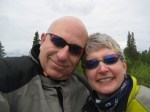
- Near Mt. McKinley, Alaska, USA
-

- Near Mt. McKinley, Alaska, USA
-
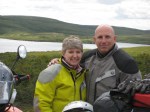
- Somewhere on the Trans Labrador Highway,
-

- Chicken Creek, Alaska, USA
-

- Cabot Trail, Nova Scotia, Canada
-
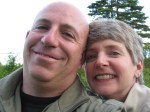
- Port Hope Simpson, Labrador, Canada
-

- Lunenburg, Nova Scotia, Canada
-
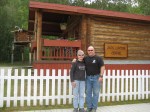
- Dawson City, Yukon, Canada
-

- Root glacier, McCarthy, Alaska, USA
-
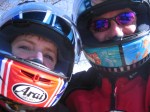
- Greenland Maine, USA


-
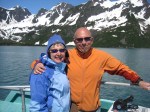
- At the helm outside Seward, Alaska, USA
-

- Kim and Mike at Rocky Harbor, Newfoundland, Canada
-

- Dinner and too much wine at the Fresh Water Inn and Bistro, Gambo, Newfoundland
-
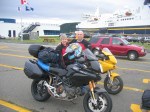
- In line for the ferry, Argentia, Newfoundland.
-
- Getting in line for the ferry. Yarmouth, Nova Scotia, Canada
-

- Side car fun in Eagle River Alaska, USA
Transiting The Trans Labrador Highway & Canadian Atlantic Provinces (Part 3)
In a misty drizzle just outside of Fermont, we rounded one of the corners beyond a railroad crossing. A road grader had recently passed and left a rather high gravel and dirt berm near the middle of the road. It has also apparently stopped there and made a slight turn because it had left a small pile of gravel and dirt a couple of feet to the right of the high berm. It wasn’t that big but that was part of the problem. It was difficult to see and it was also solid since it was filled with gravel. Soft enough to dig into but not soft enough to plow through.
I was about 100 yards ahead of Kim on my bigger KTM 950 and saw it in time to take evasive action. I don’t know why I didn’t signal her or tell her about the berm on the communicator. I guess I just figured she would see it. Dummy! Well she was on her smaller BMW F650 single and she hit it fairly dead center causing her to fall off and pile drive the big toe of her right foot into the gravel of the roadway. It also knocked off one of her panniers and tweaked the pannier frame and lock.
By the way, if you don’t know, click on any one of the pictures in the gallery below and it will open that picture into a full size picture and then you can click your way through the remainder of the pictures in either direction in full size.




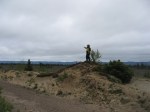


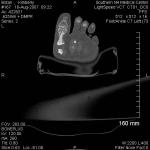
I turned around and Kim was more concerned about the bike than herself. She said her foot was a bit sore but was more concerned about how we would get her pannier closed, locked and back on her bike. (It turns out that Kim had actually broken her toe and rode the remainder of the trip with the second bone in her big toe split in two, almost down the center. I told you she’s pretty intrepid!) I had good tools and with a few tie wraps, a couple of temporary bolts, a bit of bending with pliers and smacking with rocks, we were ready to go again. Of course, the rain had to pick up and we pressed on in the rain and gathering darkness towards Labrador City for a rest and to get some appropriate bolts to fix Kim’s panniers.
When we arrived in Labrador City, it was fairly late; almost 9:00 PM. We hadn’t had any dinner and we were wet, cold, tired and hungry. The restaurant was already closed and we asked about nearby places to eat. It turned out there weren’t any open within walking distance, but the hotel folks graciously opened the bar area to us and got us some hot soup and a sandwich which we gratefully accepted. What nice people!
The following morning, it was still raining and raining with abandon. We went in search of hardware for Kim’s panniers and were given directions to a small store in town. They unfortunately did not have what we were looking for and we were standing in the parking lot trying to figure out our next move when a somewhat familiar voice said, “Hi you two, what are you doing here? We looked over and there was the woman who we had met while we were in a small hotel in Baie Comeau. We had chatted a bit and she had said she and her family lived in Labrador City and they were returning in the process of there when we met them at the hotel. Now here she was at this chance meeting! We told her of our predicament and she said she could help us out and led us to a hardware store that did indeed have the parts we needed to fix Kim’s bike. We thanked her and before we could get her full name and address, she was off. The kindness of people is amazing.
With Kim’s bike repaired, it was only a short ride on pavement until we got back onto the gravel of the TLH. “Civilization” quickly faded as the gravel grew deeper and the trees grew thicker, taller and greener. We were headed to Churchill Falls and we were really into some isolated country. It was gorgeous, but it was indeed immense. Mountains surrounded us in many shades of green. Light green and dark greens literally covering the mountains like a patchwork quilt of trees randomly distributed over and around the mountain sides. Once off the mountains, large plains could often be seen, sometimes populated with thriving green trees or sometimes with the dead trees that had expired in forest fires or been killed by flooding. And as we traveled on, not a glimpse of man made civilization was to be found. Not a sign, telephone pole, street light or manhole cover. It was wilderness and it was amazing.
After traveling for a few hours we decided to stop for a snack of a powerbar, some nuts and water. By stopping, the presence of the wide open wilderness became even more omnipresent. It was overcast and no breeze blew. It was very quiet. The road and surrounding terrain was flat and we cold see it disappear around a wooded corner in the distance. Nearby, a large sand berm approximately 10 feet tall offered a better vantage point to view the surroundings so I climbed it to look around. With the view from that berm, I could see even farther into the open and vast space around me, bracketed by verdant mountains. It was beautiful and scary at the same time. I looked down from the berm to see Kim standing 20 yards away and she looked miniscule framed by the surroundings. It was a surreal moment, one where you feel like you are only a very, very small part of the earth.
Wake up! I told myself there’s a lot more of Labrador to travel so I disengaged my mind from the scene and climbed down from the berm. We needed to get to Churchill Falls before dark and we still had plenty of miles to go. After what seemed like many hours in the wilderness, we arrived in Churchill Falls and the beginning of paved road again. Churchill Falls was built exclusively as a town to service the nearby hydroelectric dam. It is a small self sufficient town complete with hotel, high school, supermarket, and restaurant but all are in the same building. When you have to be self sufficient this far out, there’s little credit given to waste. So if you are going to build a large public complex, you may as well build them all together at the same time and that’s exactly what the folks in Churchill Falls did. Bravo.
We did get to experience a bit of what the locals must have to do all the time. When we went looking for food in town, the restaurant was closed because they didn’t have a chef. But we were told that the local bar had food. So we went there but they were a bit low on supplies as well. Kim ended up having fried cod chunks and water, and since I don’t like seafood, I ended up with mozzarella sticks and beer as a 100% nutritionally complete dinner.
The following morning we got up early for our ride to Goose Bay and the first major ferry ride of the trip. We’ll tell you more about that in Part 4.
Signs Of A Great Ride
Sometimes your “adventure travel” can become a bit mundane but if you look around, but even in the mundane there are sights to be seen. I know that as we’ve traveled to many places, we’ve seen signs that have made us say wow! Sometimes humorous and sometimes amazing, not only in print form, you may see signs that make you laugh, think, or take action. Seen any like these…?


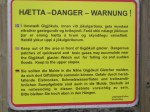

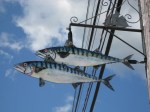


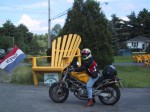
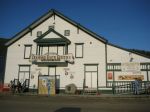

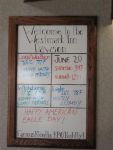


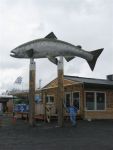


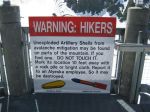


So while you are out on your adventure, make sure you always stay alert for signs of adventure.
Ride2Adventure – Shrinking The Planet One Ride At A Time
Aerostich Roadcrafter 1 Piece Suit Long Term Test Ride
For about six years now, Kim and I have been doing nearly all of our daily and adventure riding in an Aerostich 1 piece Roadcrafter suit. We thought that perhaps you’d like to know a bit about the suits themselves and how they’ve performed for us. The short answer is “remarkably well” with only a couple of reservations.
So let’s talk a bit about the suit itself. With its “armor” inserted, it’s big, fairly heavy, and at first not really easy to get on and off. Are you put off by this? You shouldn’t be, because here’s the complete story about the suit.
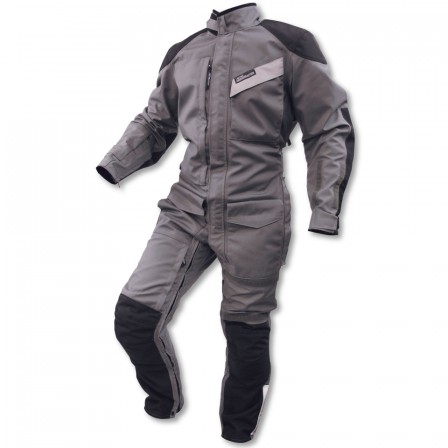
The suit is made of 500 Denier Cordura (i.e. heavy weight) which is highly abrasion resistant and which although not as abrasion resistant as leather, is pretty damn good. It’s also made of man’s single greatest accomplishment in textiles since the first diaper; Goretex. I am convinced that Goretex was a divine miracle of some sort. Water resistant (nearly water proof) and breathable, this fabric can keep water out and breathe (letting hot damp air out) at the same time. If you have ever ridden in the rain on a warm/hot day and you are wrapped in the sauna of an non-breathing rain suit, you know the miracle that Goretex represents. You stay dry and cool. Nice!
There are some bugaboos however. Downpours of greater than an hour or so will ultimately overcome the Goretex fabric and you will get wet. Light rain or drizzle for extended times can be handled without issue and you will stay dry. One issue that does occur on a hit or miss basis depending on the suit is what’s been known as “Aerocrotch”. After extended periods in the rain, water can accumulate in the crotch area of the suit and ultimately soak through leaving you with a wet crotch. It’s uncomfortable riding with a wet crotch and even more so when you arrive at your destination and you take off your suit with that “I just pee’d in my pants look.” Strangely, this doesn’t occur in all suits. I may have something to do with the fit of the suit. For example, I can get Aerocrotch, but Kim does not. Hmm….
I do note that Aerostich has redesigned the zippers of the one piece Roadcrafter suit and they claim the Aerocrotch issue has been solved. They are now offer retrofitting of old suits with new zippers and I was so satisfied with my suit that I sent mine in. Unfortunately, I still get Aerocrotch on occasion.
The suit has plenty of vents to let air in. One opens across the entire portion of your back and there is one under each arm that travels from mid-bicep to mid ribcage. There are also two hip vents just behind the hip pockets. As a result, as long as you are moving, you can get quite a bit of cooling air through the suit. Our experience has been that you can be comfortable in the suit as long as you are moving into the high 80s, low 90s. However, if you consistently must travel in a lot of stop and go traffic with temperatures in the high 80s or greater, you might want to seek another option.
A total of 4 large pockets are available as well as zippered pockets that allow access to your pants under the suit. You can carry just about anything you could possibly need in this suit. There are two velcro closable pockets on the thighs of the legs, a large zippered compartment on the chest, one on the left arm and two large pockets where pants pockets would normally be.
The neck and wrists are adjustable for size (and air flow) with velcro tabs. Options galore exist for the suit including clear map pockets for thigh, arm, made to specification sizing, extra comfort neck material. You should really go to their website at http://www.aerostich.com/roadcrafter-one-piece-suit.html to check out all the options.
After you learn how to put the suit on, it is really, really easy to get on and off. Literally, you can get the entire suit on or off in less than 30 seconds. Really. When you first get the suit, you feel very clumsy putting it on or taking it off, but as you learn how to get in and out, and the suit softens up (it is a bit stiff when you first get it – sort of like blue jeans) you’ll put the suit on or take it off just as fast as you take off all your other clothes. It really is that easy.
All in all, we really, really like these suits. They have served us very well in our travels all over the world including our rides on and off pavement. If you consistently ride in very hot temperatures in stop and go traffic, the regular Roadcrafter one piece suit is probably not for you. However, we note that Aerostich has come out with Roadcrafter Light and Ultralight suits that offer less abrasion and armor protection but are reportedly cooler and lighter weight. We have not tried either of these suits so we can not render an opinion on them. Oh and BTW, if you ever have a problem with the suit, or want it reconditioned (which we have done after abusing our suits for 5 years), Aerostich has fabulous customer service and will repair and refurbish its suits for a nominal charge. They offer the same service for crash damaged suits.
So what does this all boil to? If we were to use a star rating system, we would give the Aerostich Roadcrafter one piece suit 4.5 stars. We’ve seen a lot of suits and a lot of options, but the Aerostich Roadcrafter works best for us.
Alaska – Gravel, Grandeur & Goofy Grins (Part 7)
As we had seemingly been waiting for all day, we finally came to the fork in the road where we left the pavement and hit the gravel for the sixty mile jaunt to McCarthy. Almost immediately we began a fairly significant climb on a loose gravel surface road with no guard rail. It was quite a way down to the water below, but we were by this time quite use to the feeling of riding mountainous gravel roads with no guard rails. We continued further into the road and civilization quickly started to vanish. The road became a single two track that had us wondering for a while whether we had actually made the correct turn to McCarthy. Grass grew three inches high from between the two well defined wheel tracks and the trees closed in to only a few feet from the sides of the tracks. The road was beginning to look more like a trail than a road.
Hmmm… After about 20 minutes of this type of riding I began to wonder whether we were indeed on the correct road. But shortly thereafter, the road began to widen and some beautiful vistas became evident. Below us glowing a bright silver in the late day sun was what/who we would find out was the Copper River. She was wide and wonderful, carving large sweeping swaths between the mountains, sometimes running fast with white water, and other times merely dawdling along. She was full of life and effortlessly showed her power while letting her magnificence be known. She was breathtaking and she knew it.
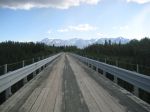
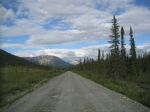


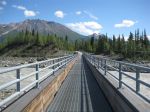
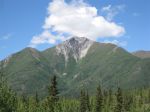









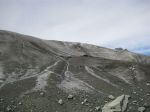


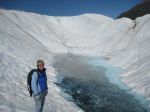





Onward we rode and signs of civilization made themselves known in short spurts along the way. A few houses huddled here and there, out in this wilderness among the towering trees, mountains and bright blue sky. However as we continued deeper into the forest, we came to recognize that to live here you must be sturdy and self sufficient. Here, the laws of nature come first and are in control, not the laws promulgated by man. Winters with double digit sub-zero temperatures and snow measured in feet not inches are not for the weak of body or mind.
Nearly two hours after leaving the pavement, we came to the parking lot (yes, parking lot!) for the place we would be staying for the next few days; the Kennicott Glacier Lodge. We had found this place nearly by accident on the web and when we found what it was near, we decided we had to visit. But here’s the deal, you can’t ride or drive there yourself (without permission from them which is almost never granted). You must take a foot bridge across a section of the Copper River to a waiting van that will drive you the last couple of miles to the lodge. In all honesty, there are other means to get there, but the natives keep that to themselves and it’s only fair to leave it that way for them.
So what’s so good about the Kennicott Glacier Lodge you ask? Well despite great accommodations in the middle of the Wrangell-Elias mountain range, it’s located directly beside the Root Glacier and a short walk from the Kennicott Mine which is now a National Park maintained in a state of arrested decay by the National Park Service. As such, it looks like an abandoned mine that it is, but it is not being permitted to decay any more than it has to date. Therefore, you can visit and experience some of what the miners life was like and what conditions they dealt with 100 or so years ago.
So it was at this awesome place that we decided to give our bikes a rest and take some time to soak in what the Wrangell-Elias mountain ranges had to give us. One day we took a flightseeing tour and flew over numerous glaciers. Words really can’t express their beauty. They are truly something that defies description so you must make it an absolute to visit a glacier in person during your lifetime.
A glacier’s amazing attributes make it one of the wonders of the world. A slow moving dynamo, a glacier is an unstoppable force, one that the earth itself cannot stop. Able to render solid rock from the walls of a mountain and carve new pathways, they possess incredible beauty often glowing so brightly that they are difficult to look at. When you do gaze upon them you may find them to be solid white or silver, striped, or brown/grey, completely covered with the rock and gravel they have scoured from the mountains as they have slowly journeyed past.
It was therefore an even greater treat to walk upon the Root Glacier for a 4 hour guided trek, where we found the glaciers not only to be beautiful, but alive. As we approached, the scene was a bit lunar like as the surface was grey and rocky with the murrain that the glacier had removed as it traveled along the mountain’s sides. However, as we made it to the top, the surface glinted and gleamed under our crampons as we walked up the side. As we crested the first peak of the glacier and investigated its surface, we saw that it indeed had the attributes of a living being. There were streams that twisted and turned, ponds of bright blue and dark azure, deep crevices and soaring ridges, all located on the body of this single glacier and all viewable during this short hike. Amazing. We stopped for a short lunch from a ridge overlooking a bright blue pond and sooner than we knew it, it was time to leave. Having been on the glacier only 4 hours, we felt cheated but at the same time honored to have witnessed its power and beauty so close and at such a personal level.
Next, we toured the Kennicott mine. Again we witnessed amazing sights but on a more human and personal level. This mine was one of the largest copper producers in the world. But producing the copper took a gigantic toll on the men who extracted the copper from the mine. The mine was truly in the wilderness and as such Kennicott had to be totally self sufficient. Rail brought in supplies and took out product, but that was about it.
You were on your own and needed to work hard to make a living. Your bunk was supplied by the company and it was a hot bunk. When you were not sleeping in it, someone else was. You worked in the mines or in the factory that separated the copper from the ore and you did it 7 days a week. The temperatures we in the double digits negatives and the heat supplied was not for the workers but to keep the machinery working. It was the lucky worker who was stationed next to the heaters that heated the machinery. If you were far from those heaters, you got the temperature the environment gave you. As we said earlier, this land required stout people.
Before we knew it, it was time to leave McCarthy and the Kennicott mine area, get back on the bikes and continue our Alaskan adventure. In the morning we would once again wait for the van beside the Root Glacier and be taken back to the foot bridge so we could make our way towards Seward where we will take you in Part 8.
I’m Going To Stop To Take A Picture (Part 3)
When you are out adventure riding, there are certain moments that beg to be recorded. The problem is that the timing may not appear to be right to take a picture or a video. You are too busy enjoying yourself, you are angry about a situation that has occurred (the 4th puncture of the day may be such a time), you may be very sad because of a sight you’ve seen or been part of someone’s plight. But the recording of such events, while at the time appearing to be too maddening, too difficult, or almost inappropriate (and there are inappropriate times I would suggest), in the fullness of time actually call to be recorded. Who will remember these times? How will these times be shared without such recordings?
Do yourself and the world a favor and record the happenings. And… once recorded, share them with others so that they too can experience what you have done, seen, and experienced and they in turn pass it on to others. Such times do are short in duration, but can be made to last forever if you just take the time to record them.




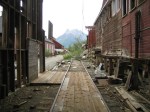

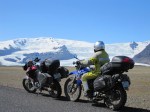

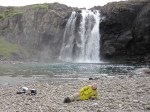

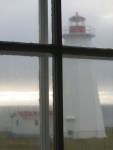










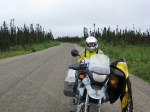




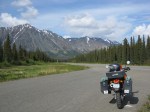








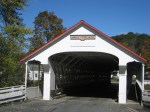


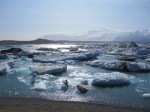


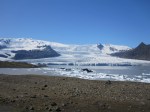

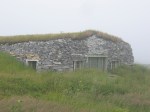









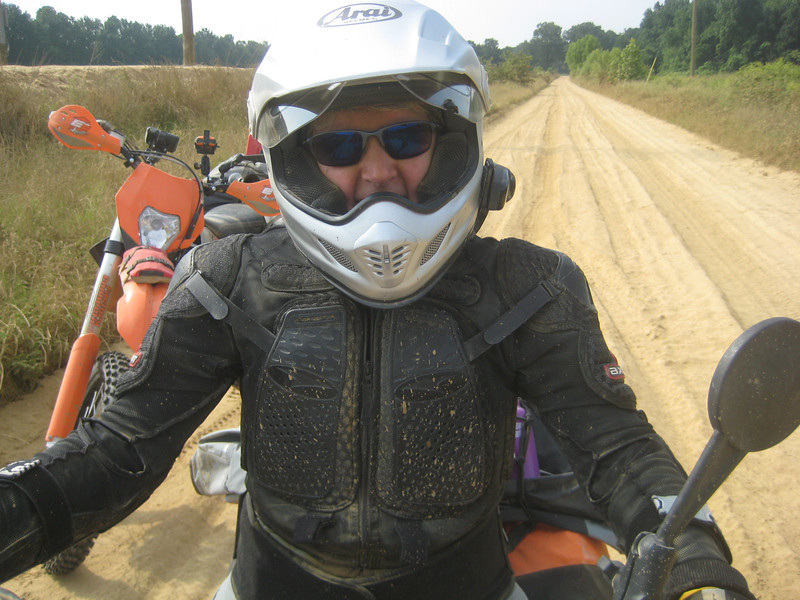




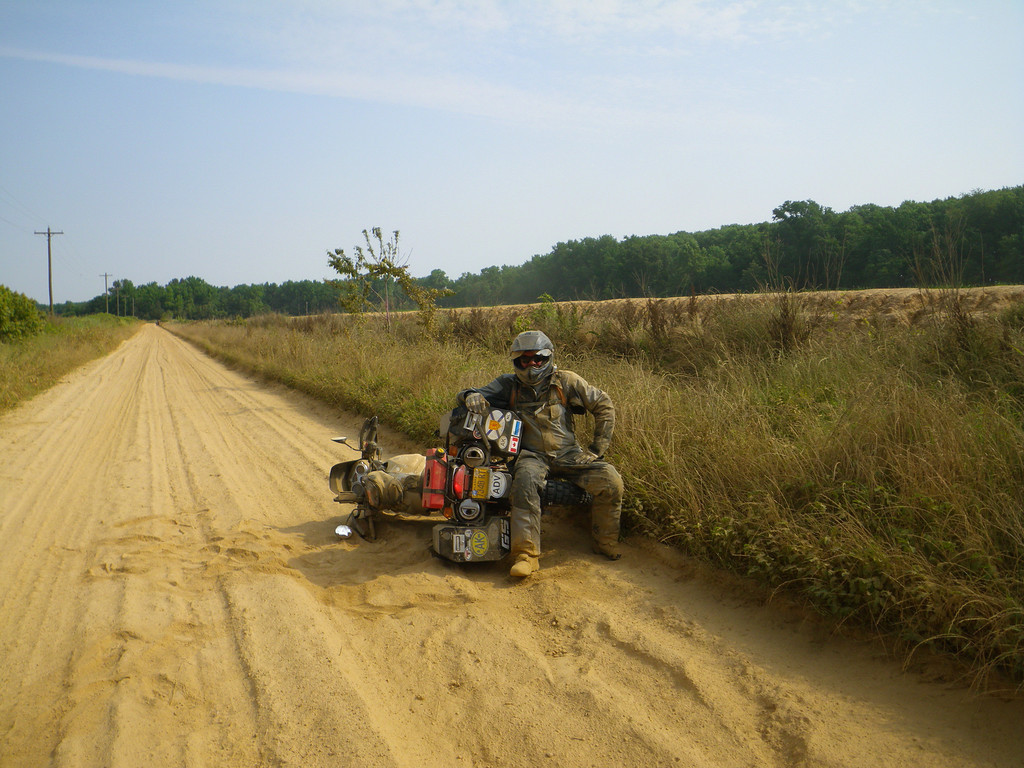


 Ride2ADV